News
How to work out what a pet supplement costs per day
A plain three-step method for cost per day, with full worked arithmetic for Trueleaf dog chews, oils and cat chews, and how bag size and Subscribe & Save change the number.
Chews, oils, powders or tablets: how pet supplement formats compare
A side-by-side comparison of the four common pet supplement formats, with cost per day for a 40 lb dog using Trueleaf chews and oils.
Canadian-made dog and cat supplements: who makes what, and where
A sourced reference table of Canadian dog and cat supplement brands, their home base, their own manufacturing wording and formats, plus how to check a Made in Canada claim.
Chews or oil: how to choose the format
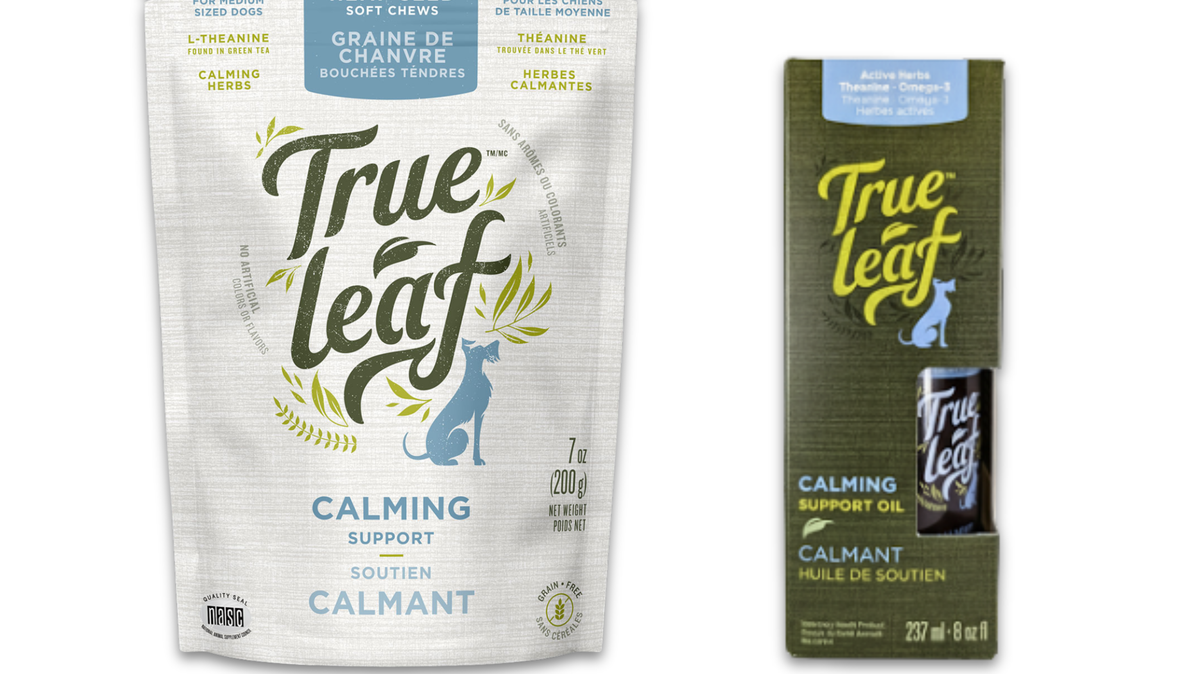
Trueleaf makes Calming Support and Hip + Joint Support in two formats: a soft chew, and an oil you pour over food. The labels list the same actives for both...
Halloween fireworks and your dog or cat: how to get ready
In much of BC, Halloween is a fireworks night, even where consumer fireworks are banned. How to get your dog or cat ready: ID, a safe spot, walks before dark, the front door, and when to start a calming chew.
How to read a pet supplement label
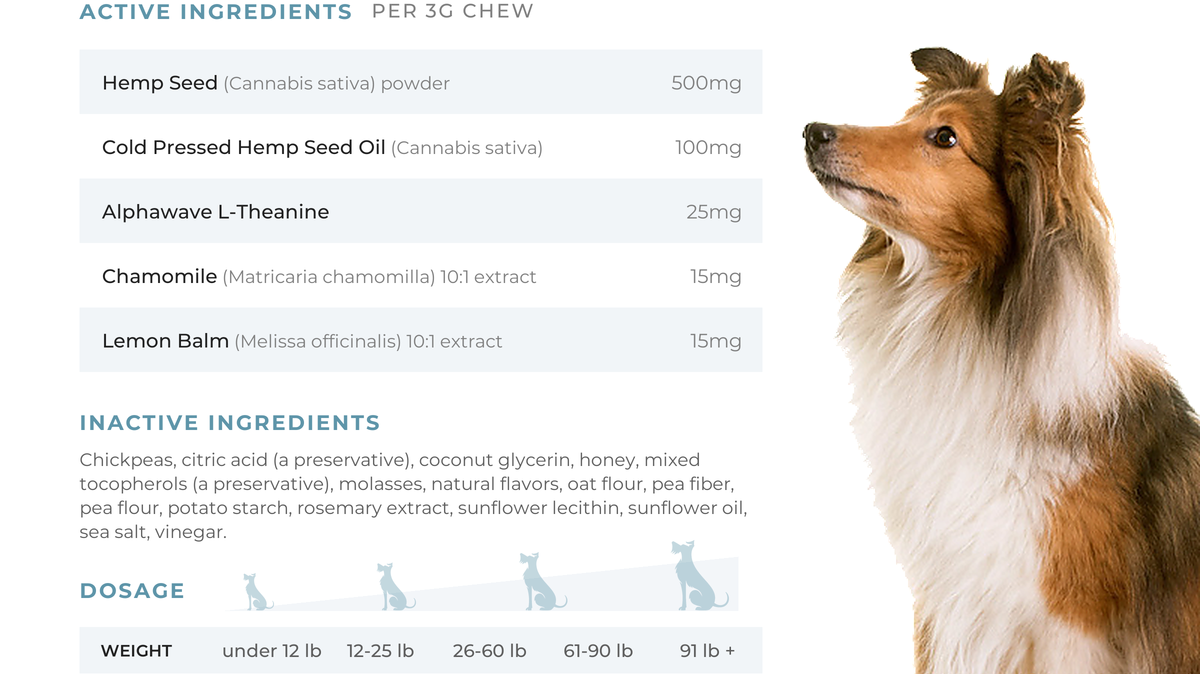
Most pet supplement labels are readable. They are just not arranged in the order you would read them if you were trying to compare two products, which is usually what...

Cat supplements are not small dog supplements
A cat is not a small dog. That is not a figure of speech about temperament. It is a statement about physiology, and it is the reason a cat supplement...

What the ingredients in a calming chew actually do
Four ingredients turn up in most calming chews for dogs: L-theanine, chamomile, lemon balm and hemp seed. They are not interchangeable, they do not come from the same places and...
How much supplement does my dog need
Supplement amounts for dogs are set by body weight. Not by age, not by breed and not by how big a dog looks. A lean 60 lb collie and a...
Cat supplements: how much to give, and what is in them
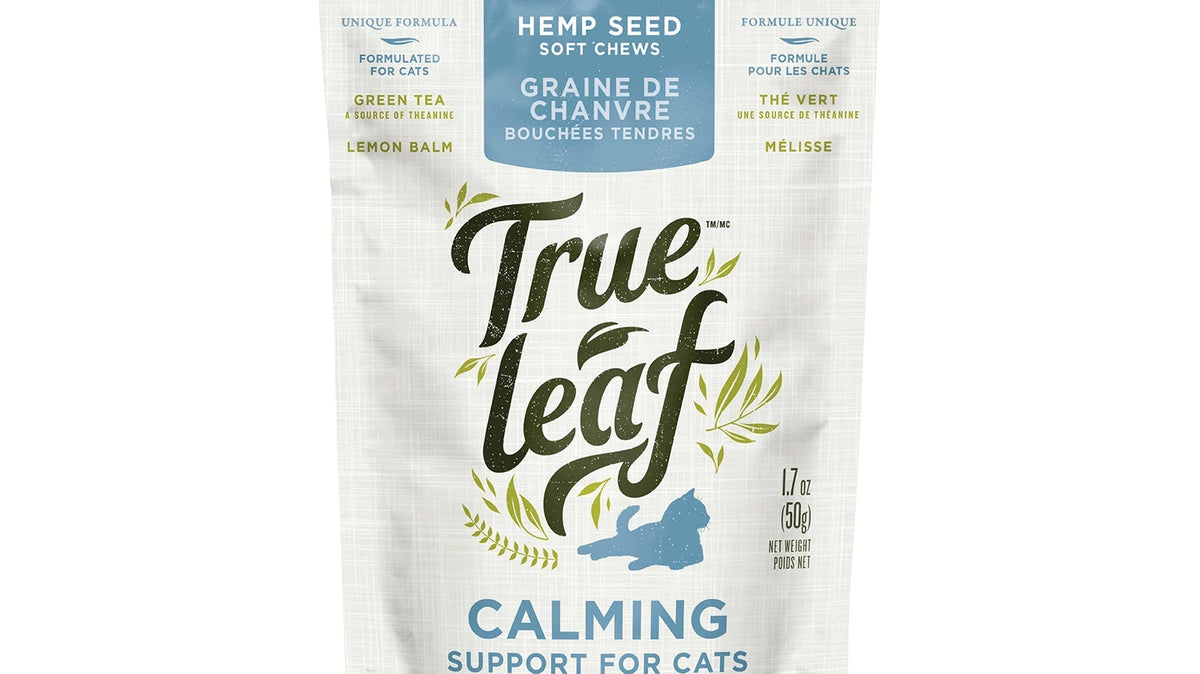
Short answer. Cat supplements are dosed by body weight, like dog supplements, but the amounts are not proportional and the three Trueleaf cat formulas do not share one table. Calming Support runs one chew a day for a cat up to 5 lb and five a day over 20 lb. Hairball Support and Senior Support both run double that, two a day up to 5 lb and ten a day over 20 lb. Cats are not small dogs, and a supplement formulated for a dog should not be given to one.
Dental care for a dog who will not let you brush
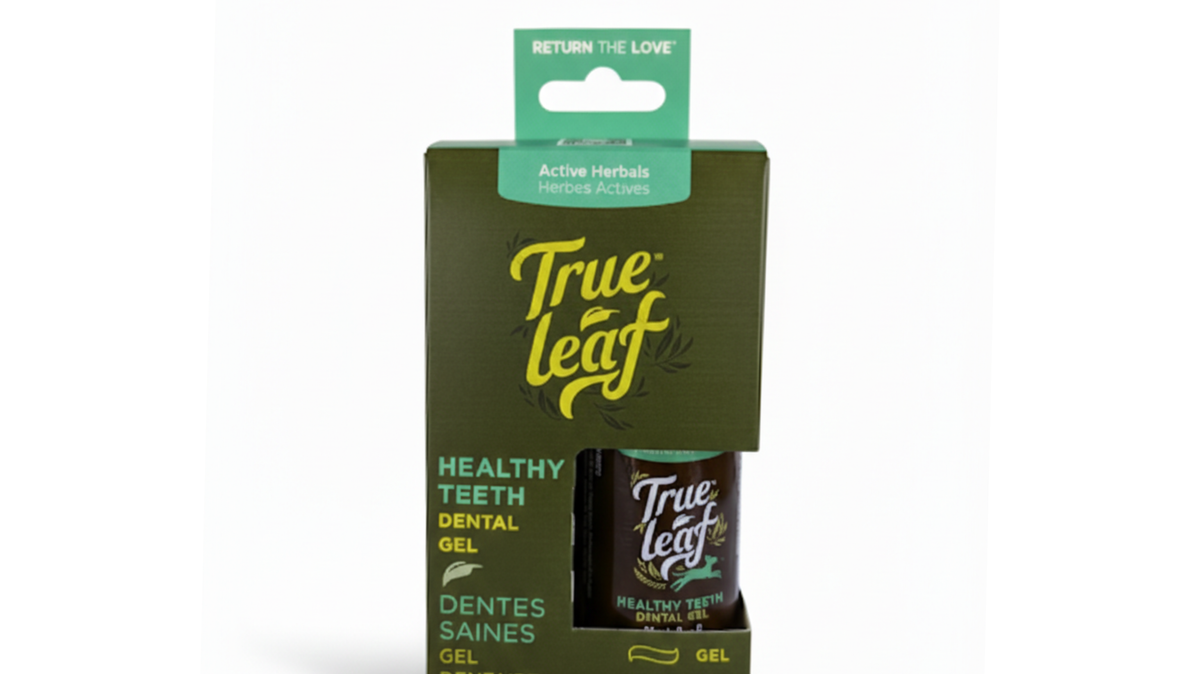
Short answer. Brushing is still the most useful thing you can do at home, and most owners never manage it. If your dog refuses, the realistic fallback is a gel or a spray applied daily along the gum line, plus something appropriate to chew and a yearly veterinary check. Gels and sprays are not dosed by body weight, which makes them the easiest habit to keep. None of it removes tartar that has already hardened. That needs a veterinary cleaning.
Hip and joint support for senior dogs: ingredients and amounts
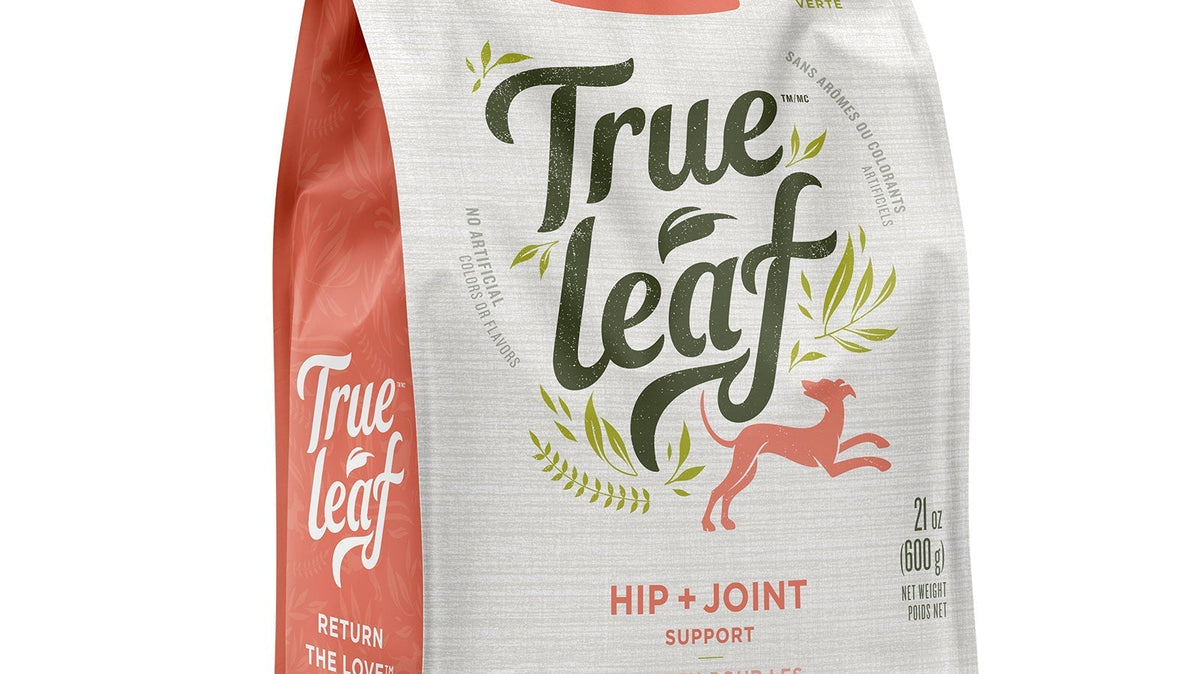
Short answer. Joint supplements for dogs are dosed by body weight and given every day, because the ingredients work by building up rather than by acting on the day you give them. Trueleaf's Hip + Joint chews are one chew per 8 lb of body weight a day, so half a chew for a 4 lb dog and twelve for a 96 lb dog, with twice the daily amount for the first 10 days. The ingredient with the most direct canine research behind it is the marine Omega-3 group, green lipped mussel included. Glucosamine and chondroitin have a far more mixed evidence base than their fame suggests. Give it six to eight weeks before you judge it, not two.